
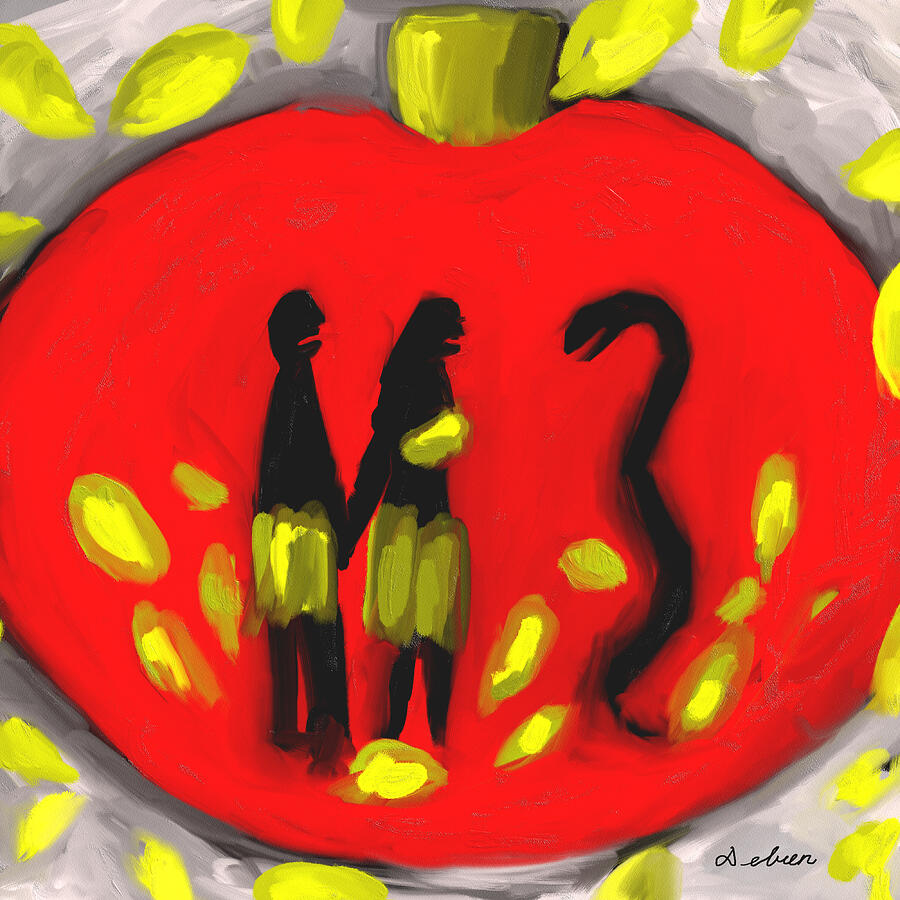
“And the Lord God commanded the man, ‘You are free to eat from any tree in the garden;
but you must not eat from the tree of the knowledge of good and evil,
for when you eat from it you will certainly die.’”
(Genesis 2:16–17)
The Question Behind the Forbidden Fruit
Even people who do not attend church have often heard of the “forbidden fruit” in Eden.
And among those who do go to church,
many ask a question I once asked too:
“Why did God make the tree of the knowledge of good and evil?
Did He give people a test on purpose?
If He had never made that tree,
wouldn’t Eve have been safe from the serpent’s temptation?”
God created this world beautifully
and placed Adam and Eve in a garden called Eden.
They were given a glorious calling that no other creature received.
They were to rule over all creation on God’s behalf.
And unlike the rest of creation,
they were made in the image of God.
What must it have been like for Adam and Eve in Eden?
They were like rulers of the garden,
governing in the name of the Lord.
Yet in the middle of that garden,
God placed one tree and commanded them not to eat its fruit—
the tree of the knowledge of good and evil.
A Boundary to Protect, Not to Trap
Why did God do this?
Those who ruled over all other creatures
needed to remember that Someone had made them.
God set a boundary so that pride would not grow in their hearts,
and so their relationship with Him would not be broken.
I believe the forbidden fruit was not a trap,
but a safeguard—
a tool to protect their life and safety
by helping them remember their Creator.
It was as if the fruit were saying,
“Remember your Creator God.
Remember the One who loves you
and has entrusted all this into your hands.”
The tree stood as a visible reminder
that they were not the source of their own life,
but dearly loved creatures under the care of God.
When “Remember the Creator” Turns into “Be the Creator”
But the enemy used that very tree
to whisper a completely opposite message.
To Adam and Eve he said,
“You can become like God.”
“If you eat this, your eyes will be opened
and you will be like Him.”
The fruit that was meant to say, “Remember your Creator,”
became a tool that carried the lie, “Become the creator yourself.”
The same kind of message fills the world we live in today.
“You are the master of your own life.”
“You can do anything if you just set your mind to it.”
“Do not underestimate yourself.”
“Break past your limits and chase your dreams.”
“Your desires, your dreams, your vision, your future—
you can achieve it all.”
These are messages filled with “me.”
Messages that make it seem as if I am the owner of my world,
as if I am the creator.
But such messages will ultimately lead us toward destruction—
just as they did for Eve,
and just as they did for Adam.
They were cut off from a loving relationship with God,
driven out of Eden,
stripped of their glorious role as those who ruled on God’s behalf.
Remembering Who Truly Owns Our Lives
We must discern what kind of message
is hidden inside the whispers that shake our hearts.
We are not the Creator.
We are not the ultimate owners of our lives.
We are the ones who have been made.
We have one Creator—
the one and only God.
He alone is the true Lord of our lives.
I hope we never forget this.
Let us no longer fall for lies
that make us believe we are the masters of everything we have.
And let us also remember
that He has entrusted us with work to do in this world—
not as little gods,
but as beloved creatures,
living under the care and authority of our Creator.